When organisations think about workplace safety, the conversation often centres on policies, Safe Work Method Statements (SWMS), training records and compliance.
These are all important—but they don't make decisions on the job.
People do.
And the people who influence those decisions more than anyone else are your supervisors.
Safety Happens at the Front Line
A supervisor is the link between management's expectations and the work being performed.
Every day they make decisions such as:
Is this task safe to begin?
Has the work changed since the SWMS was prepared?
Does everyone understand today's hazards?
Is the equipment suitable?
Should the job stop until a risk is controlled?
These decisions often occur in real time, long before management becomes aware of an issue.
Workers Follow What They See
Most workers quickly recognise what their supervisor truly values.
If a supervisor consistently says:
"Take the time to do it safely."
...and then allows time for safe work, workers notice.
If the supervisor instead says:
"Just get it finished."
...workers notice that too.
Safety culture is built far more by daily behaviour than by posters on the lunchroom wall.
The Best Supervisors Ask Questions
Good supervisors don't simply give instructions.
They ask questions such as:
"What could go wrong here?"
"Has anything changed since yesterday?"
"Are we using the right equipment?"
"Does anyone see a better way to complete this safely?"
These conversations encourage workers to think about risk rather than simply following instructions.
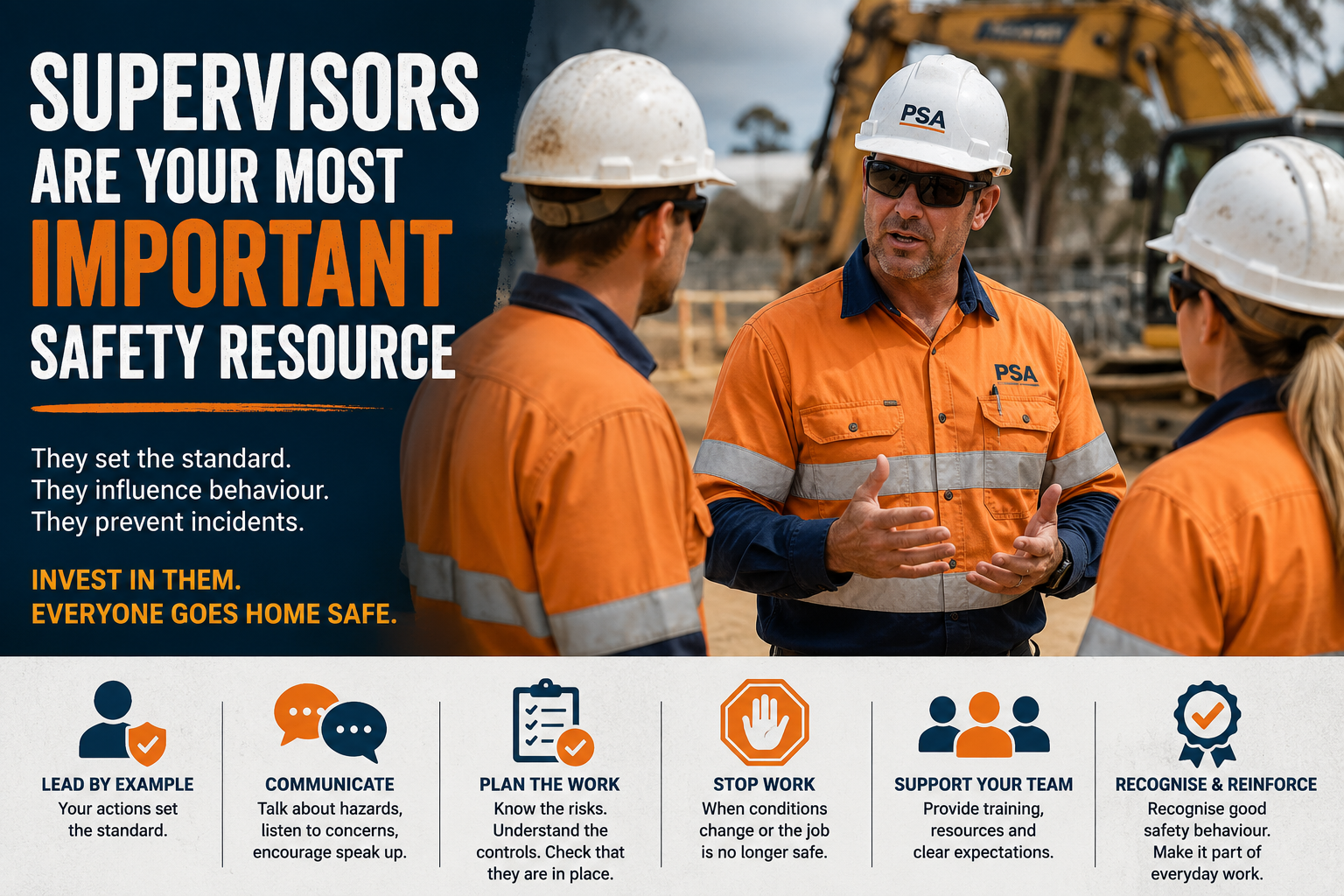
They Know When to Stop Work
One of the most valuable qualities in a supervisor is recognising when work should not continue.
That may be because:
weather conditions have changed
equipment has developed a fault
underground services have been identified
traffic conditions are different from the original plan
workers are fatigued
the planned controls are no longer effective.
Stopping work isn't a failure.
Continuing unsafe work is.
Documentation Still Matters
Supervisors don't replace SWMS, risk assessments or pre-start inspections.
Instead, they bring those documents to life.
A SWMS sitting in a folder does not protect anyone.
A supervisor who understands the hazards, discusses the controls with the team and ensures they are followed does.
Developing Better Supervisors
Many supervisors are promoted because they are excellent tradespeople or operators.
Leading people, however, requires a different set of skills.
Organisations should support supervisors with training in:
communication
hazard identification
incident reporting
risk assessment
coaching workers
conducting effective toolbox talks
managing difficult conversations.
Technical ability alone is rarely enough.
What Makes an Effective Safety Leader?
The strongest supervisors are not necessarily the loudest.
They are the people who:
lead by example
listen to workers
encourage reporting of hazards and near misses
correct unsafe behaviours respectfully
recognise good safety practices
remain consistent, even under production pressure.
These behaviours build trust, and trust encourages workers to speak up before a minor issue becomes a serious incident.
The Bottom Line
Every organisation invests in safety systems.
The return on that investment depends largely on the people who apply those systems each day.
A capable, engaged supervisor can identify hazards early, prevent incidents and create a workplace where safety is simply part of how work is done.
If you want to improve workplace safety, start by investing in your supervisors.
They are your most important safety resource.